
Start a Killeen Residents Search
Anchor your search on the fact you know cold. A precise Killeen address works best. Pull the property account and map first, since together they pin down the parcel, the situs address, and legal-description hints. A person works differently. Start from a dated public role, whether that is property owner, court party, license holder, or an entry in a residents directory. Remember that Bell County and city systems answer different questions, and a Killeen mailing label can brush up against county, postal, or Fort Cavazos boundaries. Record the source's exact wording. Do not quietly standardize it yourself.
Treat one name match as a thread, not a conclusion. Build a small record trail instead. Pair the name with a date plus one independent signal: a street address, a middle initial, a parcel ID, a spouse, a case number, an organization, or a cemetery date. A similar name in an index is only a lead, and old indexes are often incomplete. Log the portal, the filters, the access date, and whether the result came back or not.
- Search a complete street address or owner name in Bell CAD and write down the property or geographic ID.
- Check the map and city-limit context before treating a postal Killeen label as a municipal location.
- Use the Clerk's recorded index for a dated grantor, grantee, subdivision, or document-number trail.
- For an older household, compare the available directory years, newspapers, maps, and public census schedules.
- When the record is not online, ask the custodian for an existing record by its specific address, number, and date range.
Note: A narrow, dated search log beats any broad claim that a record or a person does not exist.
Killeen Resident Records Offices
Killeen sits inside Bell County, but Belton holds the county seat. That split shapes every resident lookup. City departments keep the municipal material, while the County Clerk routes recorded instruments and several county record searches. Bell CAD maintains the appraisal accounts. The elections office administers voter registration. When an index does not expose a government record, the Texas Public Information Act is the fallback, so take each request to the office responsible for that record type rather than the office nearest the address.
Bell County Clerk
P.O. Box 480
Belton, TX 76513
Open Records Request route
The County Clerk's designated open-records mailbox is Shelley.Coston@BellCounty.Texas.gov. For Killeen Police and all Fire/EMS requests, use the city's posted public-information route and its JustFOIA portal. A good request names one existing record. Include the department, an address or number, the date span, and your preferred electronic format.
Map Killeen Parcels First
Geography comes first. Public map layers lay out parcel outlines, street centerlines, city limits, roads, structures, parks, and council districts. Drop a full address into the map. Is the point in Killeen or near Fort Cavazos? It might sit inside another Bell County city too, and a postal city line only helps the mail carrier, never the boundary. That is what the parcel settles. The parcel is the handoff between a familiar street address and a legal description traceable in other records, from property rolls to deeds. The Killeen GIS Datahub shows the map environment used for parcel and street context.
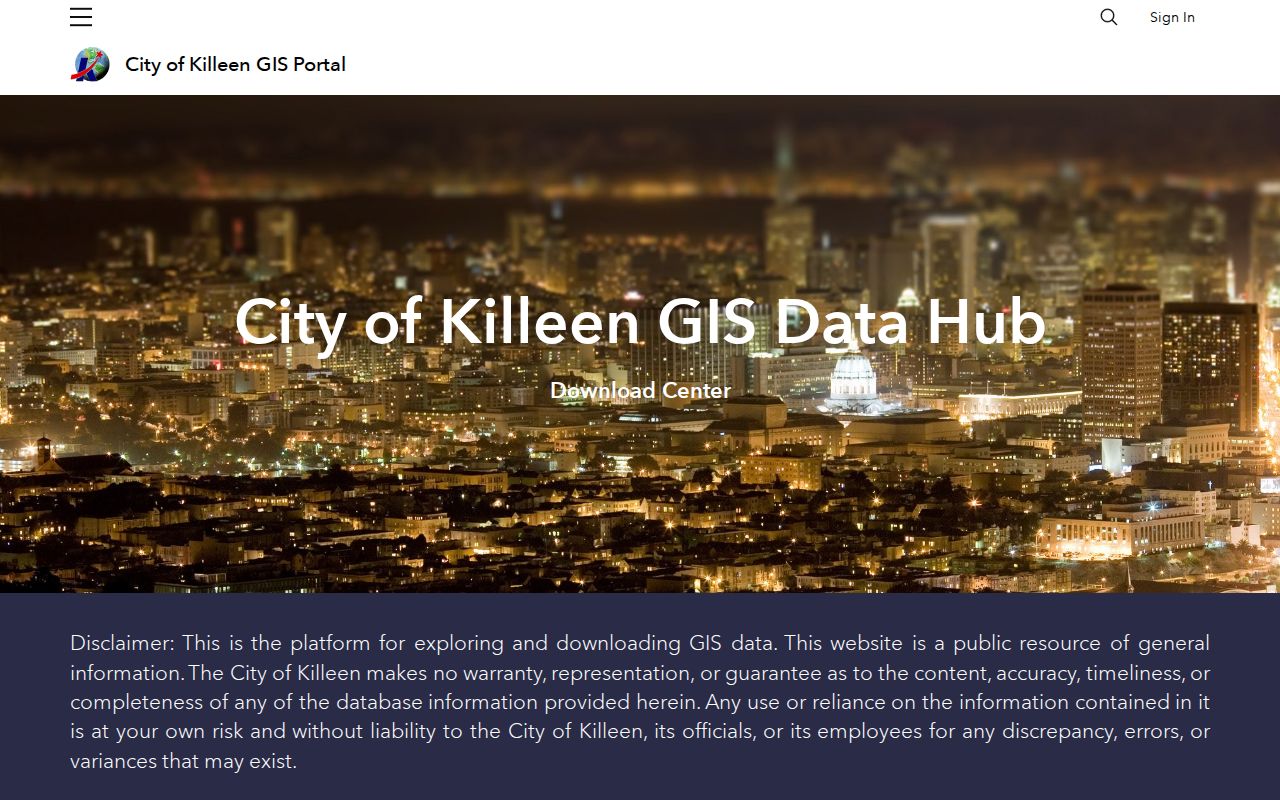
Treat the parcel shape and ID as a location check, not a household list. No verified occupant layer exists on the public map. A long, narrow downtown parcel can look like a mistake. It may simply reflect the historic railroad plat instead. One sequence works well. Address first, then the map parcel, then the CAD account, then the recorded instrument. Keep the exact source spelling at every stage. Directional abbreviations, old street forms, mailing city labels, and installation names can each change how the same place reads in an index.
Check Killeen Appraisal Leads
Bell CAD anchors most property leads for a Killeen residents directory search. Its eSearch screen is flexible. Owner names go in Last Name First Name order. The same screen filters by street number, street name, property ID, geographic ID, and subdivision. Tax year and other advanced fields narrow it further. A result can carry a situs address, a mailing address, an owner name, legal-description cues, values, exemptions, and tax-year details. Those labels describe an appraisal account. A mailing address there is not proof that someone occupies the parcel.
| Bell CAD search field | Useful role | Careful reading |
|---|---|---|
| Owner Name | Find an appraisal account | Enter surname before given name |
| Street Number and Street Name | Locate a situs address | Try source spelling variants separately |
| Property or Geographic ID | Carry a parcel lead across records | Keep the tax year beside the ID |
| Subdivision or Legal Context | Bridge to the recorded index | Compare before treating parcels as the same |
Login sets a separate boundary. The account-only Bell CAD taxpayer portal should not be mined for details the public eSearch never displays.
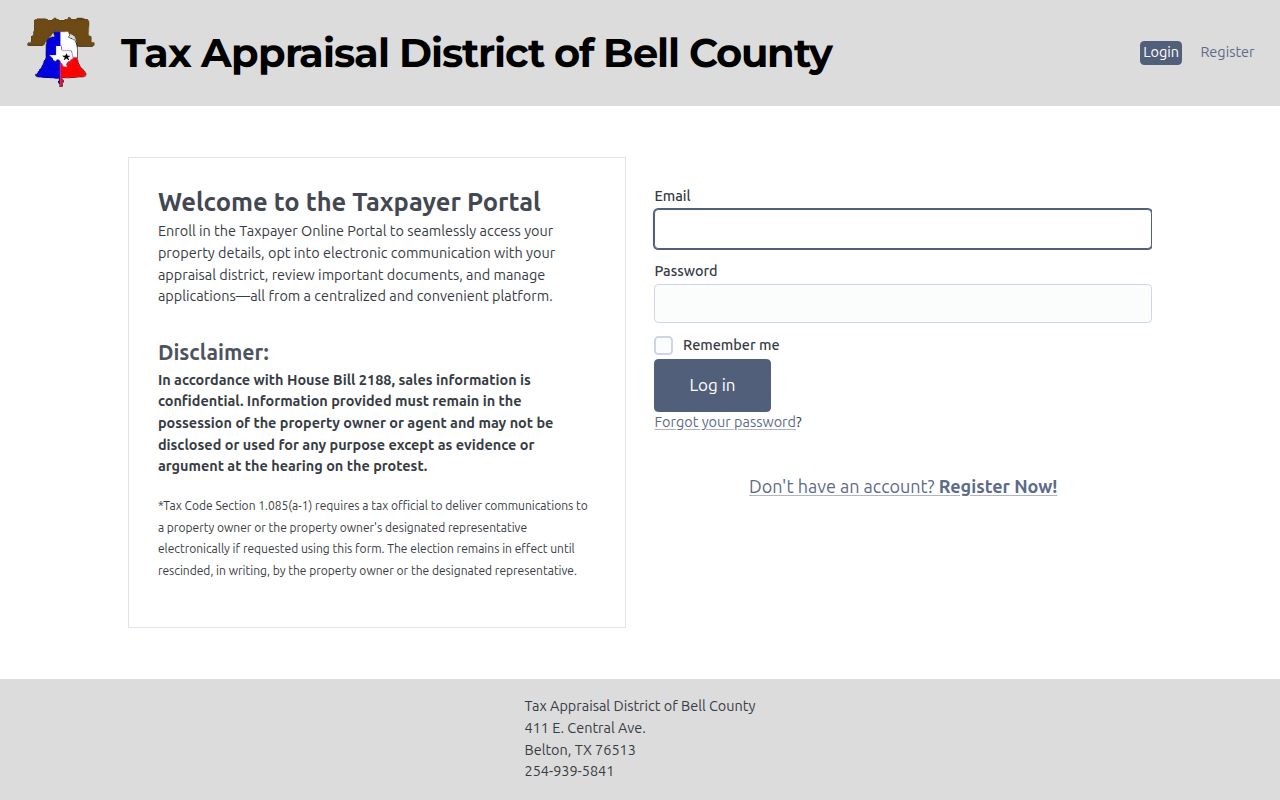
The appraisal district offers its own cautions. CAD legal descriptions and acreage figures can shift between rolls, so verify them before relying on any parcel record.
Trace Killeen Names in Deeds
Deeds add the dated paper trail that no appraisal account or parcel map can supply. The Bell County Clerk keeps that trail in its Official Records index. A single Search Term can pull a grantor, a grantee, a subdivision, a document type, or a document number. Recorded-date filters tame a common surname fast. Choose Index Only for the clean, normalized records path. Index & Full Text leans on OCR and can match words buried inside scanned documents. Run each index word separately. Log the scope you picked. The Bell County Official Records Search lays out those choices. It also posts the recorder's certification notice.
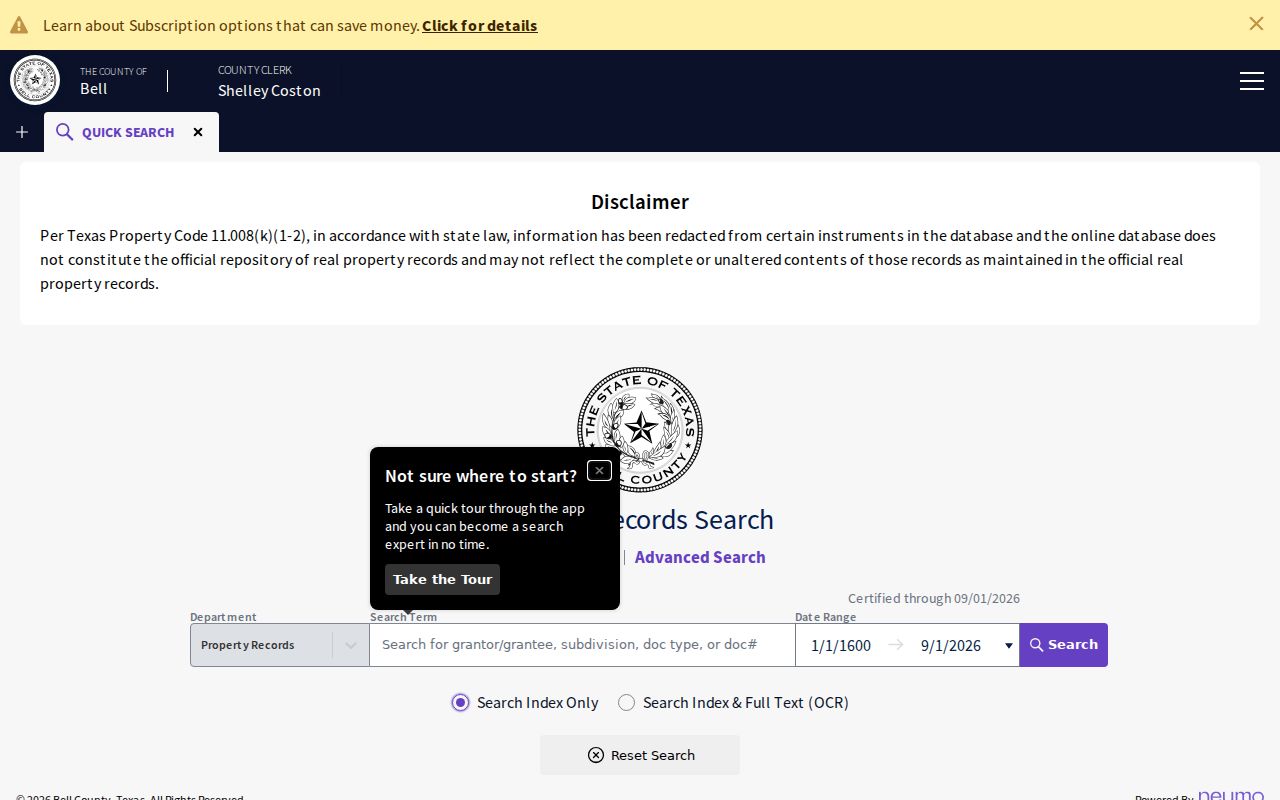
A name on a recorded deed ties a person to one filing event, nothing more. It does not prove where that person lives now. When you pull a hit from the deed index, capture the instrument number, the document type, the recorded date, the party's role, and any legal-description clue it carries. Those details travel well. The online deed index publishes no stated first year. Older books may sit with the Clerk, on microfilm, or behind a counter and require archival legwork.
Killeen Current Resident Sources
Killeen has no single public roll naming every household. Each source answers a narrower question. Property records name owners or mailing contacts, recorded instruments name document parties, voter tools answer a defined registration question, and city staff listings identify public officials and departments. Keeping those roles straight matters. A real but limited record can quietly turn into a false claim about everyone at an address if you treat it as a census. The Killeen residents directory draws on many such sources, and each one earns its place by describing a role rather than a whole population.
| Killeen source | Role shown | Custodian | Access path |
|---|---|---|---|
| Bell CAD appraisal account | Owner and mailing lead | Bell CAD | Public eSearch or office |
| Texas My Voter Portal | Registration-status lookup | Texas SOS | Official individual lookup |
| Official Records index | Grantor, grantee, and filing parties | Bell County Clerk | Index, image or copy route |
| Killeen staff directory | Public city officials and departments | City of Killeen | Online category and name controls |
| Historical Society resources | Directory, yearbook, and phone-book leads | Bell County Historical Society | Appointment and Research Topic Form |
Suppose the question concerns one person rather than an address or a document. The Killeen resident lookup route keeps court, vital, voter, credential, and property roles separate. It does not blend them. Compare dates every time. A registration checked this month answers one question. A deed recorded a decade ago answers another entirely.
Date Every Killeen Record Search
Coverage tracks the record set, not the city name on the search box. Bell County describes its civil and probate index as online from October 1989 forward. Its criminal route is 1986 forward. The Official Records portal posts certification through August 31, 2026. That marker guarantees nothing about indexing. A record can exist yet remain outside the indexed range. A finished search is never quite finished. The county states no first year for its online deed index. Write the date range beside every search, and note the day you ran it.
| 1986-present | County criminal index range described by the County Clerk; older material needs a Clerk route. |
|---|---|
| October 1989-present | County civil and probate index range described by the County Clerk. |
| 1963, 1982, 1990 | Killeen directory years listed by TSLAC, not a continuous local run. |
| 1926-1937 | Library of Congress Killeen Sanborn sheets for building and block context, not occupants. |
A dated record beats an undated name match. Set the record's event date, its filing or document date, and the directory year side by side. Also note the day you checked the portal before drawing any conclusion. Gaps deserve plain language. Say a record was not located in the searched index and range, nothing broader. Misses happen for ordinary reasons. Spelling variation, a portal outage, privacy suppression, sealed material, retention limits, or a plain indexing gap can all be to blame.
Killeen Voter Records Need Care
Texas My Voter Portal is the official route for one narrow question. It checks an individual's registration status. The state's guidance offers lookup choices by VUID and date of birth. You can also search by Texas driver license or personal ID with date of birth. A first and last name works too. That limited purpose is nothing like a household roster. Texas carries no ordinary party-registration field. Election history never reveals how a person voted. It does not establish a lasting party affiliation either.
| Source category | Best use | Limit to remember |
|---|---|---|
| Official public index | Check a dated public role or filing | Scope and access rules vary by custodian |
| Commercial data compilation | Generate a lead to verify independently | Data can be stale or merge similar names |
| Voter lookup or lawful list request | Registration or permitted list purpose | Protected fields and addresses remain restricted |
Election Code chapters 13 and 18, plus Secretary of State privacy guidance, govern what may be disclosed. Never work around a suppressed voter address, a protected category, or a missing result by stitching together unrelated data.
Request Killeen Existing Records
When a city or county portal stops at an index, request the existing record from its custodian. Killeen's Information Requests route lays out the city's public-information process. It routes Police and all Fire/EMS requests through JustFOIA. For a permit, inspection, code case, or municipal record, name the department. Also give the precise address or case number, the date range, and the format wanted. Ask for an electronic copy where one exists. Ask the office to identify fees or an applicable exception.
Chapter 552 lets a requester seek existing government information without stating a reason. It remains subject to exceptions, clarification, and charges. It never forces an agency to build a history from a vague description. A governmental body may request more detail or seek an Attorney General ruling. So the statutory steps promise no delivery date. Vital certificates, confidential court material, and protected-address information follow their own access rules.
For County Clerk records, use the designated Belton route. Don't mail a general request to an unrelated office. Court copies often move faster through the Clerk or District Clerk form. Have the cause number, approximate date, parties, and desired documents all known.
Note: Keep full dates of birth, identity documents, and protected addresses out of any request example or public screenshot.
Killeen Library History Leads
Hunting a past Killeen resident? Start with the library catalog. Ask the reference desk about local-history shelves, newspaper microfilm, yearbooks, and unindexed vertical files. The catalog points to FamilySearch, Portal to Texas History, TexShare resources, and PressReader. Its electronic-resource notice deserves a check before any visit. Treat the library as a doorway, not a complete person index. A catalog hit merely names a source worth inspecting. The source itself supplies the date and the context. The Killeen library catalog shows the public search interface and its resource notices.

Run each search on its own terms. A surname, a street name, an organization, or a single year works best when tried separately in the residents directory records. If a digital item is missing, other lawful paths remain. A reference request, an onsite resource, or an archive catalog often opens the next door.
The Bell County Historical Society holds an in-house Gateway Index along with yearbooks, phone books, local history volumes, biographies, and family-history material. Access starts with a Research Topic Form and an appointment, so plan it as a prepared research visit rather than a casual online lookup.
The Historical Society onsite-resources page describes the appointment-based collection.

Local collections can bridge real gaps in online directories. Still, an archive finding aid or transcription remains a lead until checked against its original image or a government custodian's record.
Historic Killeen Resident Directories
Killeen's historic residents directory shelf is uneven, and that is exactly why it pays to work carefully. The Texas State Library and Archives holds Killeen directories for 1963, 1982, and 1990. A citation at UT Briscoe lists R. L. Polk & Co. Killeen editions from 1965 through 2003. Those years come with gaps between listed editions and with Killeen/Copperas Cove location labels that shift from one printing to the next. A citation alone is not a scan. Any named city directory must still be read through its catalog record, its year, and its location label before it can serve as evidence in a resident lookup.
- Directory entry
- A published observation for that edition year, which may include a name, address, phone, spouse, occupation, or ownership mark.
- Criss-cross directory
- An address-ordered section when a volume includes one, useful for checking a historic street rather than a person’s name.
- Parcel
- A mapped land unit. Its legal description can connect an address to a recorded instrument but does not identify every person there.
- Index
- A searchable list that points to a record. It is not necessarily the original image or a certified copy.
A city-directory entry gains real weight only when paired with the nearest census schedule, deed, newspaper notice, cemetery source, or map. Federal individual census schedules through 1950 are publicly released. Preserve the compilation year, not just the name you found. The Killeen city directories collection covers the shelf in fuller detail for anyone tracing past residents of Killeen.
Protect Killeen Residents First
Some absent results should stay absent. That principle matters in any Killeen residents directory search. Juvenile files, sealed and expunged cases, adoption papers, protected vital records, and address-confidentiality material can all be withheld. The custodian can also redact them. Texas opens birth records to the public after 75 years and death records after 25 years. Protected certificates still require a qualified-requester route through the records office. The Texas Address Confidentiality Program lets qualifying participants use a substitute mailing address. Voter rolls carry protected categories of their own. A missing name is not always an error in the resident lookup.
Lawful personal research only. Use Killeen records for a legitimate personal, family-history, civic, or property question, and never to stalk, harass, intimidate, or harm anyone.
Role labels belong in every note you keep from a Killeen lookup. Owner, mailing contact, voter, court party, booking subject, interment, and license holder are not interchangeable roles. Treating them as one person distorts the record. When a record is restricted, the right answer is the custodian. It also includes the eligibility rule and the request channel. Nobody should try to reconstruct a hidden identity or address from property rolls, voter rolls, or a deed.